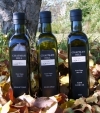
Chapman Hill Extra Virgin Olive Oil

Grades of Olive Oil

Oils ain't oils...

Learn about the different grades of olive oils.

The best olive oil is called "Extra Virgin," traditionally derived from a cold pressed process that involves only pressure to extract the olive oil, and results in a natural level of low acidity. Today, this level of quality is still able to be achieved using more modern pressing methods.

Climate, soil, variety of olive tree and time of harvest account for the different organoleptic properties of different extra virgin olive oils. "Organoleptic" properties refers to the olive oil flavour, bouquet and color. The term comes from the Greek organon (tool) and leptos (fine), and usually refers to the instant when all the senses are employed in a food's assessment.

Extra-virgin olive oils must have an acidity of less than 0.8 percent. Virgin olive oils, on the other hand, may have an acidity between 0.8 and 2 percent.

Extra Virgin Olive Oil is virgin olive oil that has a minimum organoleptic rating of 6.5 out of 10, and acidity under 0.8%. It is the olive oil of the highest quality, and boasts a perfect, fruity taste, and with a color that can range from champagne to greenish-golden to bright green. (Colour is not an indication of quality.) Extra Virgin Olive Oil can be used in various ways in the kitchen, and in Italy it has been a traditional ingredient in everything from antipasti to desserts.

Because of the time-consuming process required to manufacture extra virgin olive oil, and its limited production volume, true extra virgin olive oil is expensive. Thus, any inexpensive olive oil labeled "extra virgin" has probably been blended with a lesser quality olive oil or even canola oil, and is probably not authentic extra virgin olive oil. It is true that when you pay peanuts, you get monkeys!

What is the difference among the different grades of olive oil?

Extra Virgin Olive Oil is the top grade of olive oil and is the most natural and flavoursome of all oils. It is a virgin, or unprocessed, oil which must have an acidity level of not more than 0.8 per cent. The oil must also have perfect aroma, flavour and colour and free from defects. The lower the acidity of the olive oil, the higher the quality and the more distinctive the flavours and aromas.

Extra virgin olive oil is more expensive than olive oil because it is produced in smaller quantities from select olives, and offers the widest range of tastes. In extra virgin olive oil, as in wine, flavour and aroma depend on a number of variables: the variety of olive, growing conditions, the time and method of harvest, and finally the care with which the olives are turned into the finished product, bottled and stored.

Olive Oil is the product of blended oils which have been refined to balance acidity, aroma, and taste. Refining makes the oil colourless, odourless and flavourless. Virgin olive oil is then added in small quantities (typically 5 to 25 per cent) to give the oil some character. Olive oil must have an acidity of less than 1.5 per cent. While less flavourful and aromatic than extra virgin olive oil, olive oil is high in monounsaturated fat and remains a healthy choice of cooking oil.

Olive-Pomace Oil is extracted from the "pomace" (the remaining portion of the olive after pressing) through the use of solvents. The resulting oil is refined to produce a colourless, odourless and flavourless oil.

(Source: International Olive Oil Council)

Beneath Extra Virgin Olive Oil comes Virgin Olive Oil. Like extra virgin olive oil, it is also cold-pressed. It has an organoleptic rating of 5.5 or more and an acidity of max 1.5 percent. Quality olive oils are obtained when the olives are crushed as quickly as possible, since any storage would trigger a fermentation process in the fruit, making the oil produced increasingly acidic and undesirable in both flavor and aroma.

Cold Pressed Extra Virgin Olive Oil

What do first pressing and cold pressing mean?

These terms are interchangeable and were used in the past when initial pressure applied by hand powered presses produced only a limited amount of olive oil from the olive paste. To extract more oil, hot water was applied to the olive paste to improve the flow of oil - that's how the term cold pressing and first pressing came about. Today, some producers use these terms on their labeling to reaffirm that extra virgin olive oil is an unrefined, natural product that has undergone very little processing and will retain it's nutritive value.

(Source: International Olive Oil Council)

Simple Tests for True Quality Extra Virgin Olive Oil

Place a small quantity of the oil in a glass bowl and refrigerate it for a few days. If it becomes crystalline, the chances are good that it is a true extra virgin olive oil. If it forms a block, it is most likely chemically refined olive oil that has had some first-pressed olive oil added to it.

Another test to see whether olive oil has been blended is to place a tablespoon of olive oil in a hot pan and heat it up. If the olive oil can be poured back into the same tablespoon after heating then it is most likely blended. If the volume of olive oil increases after heating, it is most likely cold pressed pure extra virgin olive oil.

Buying Extra Virgin Olive Oil

When you are looking to buy extra virgin olive oil, you have to be vigilant as the majority of the olive oil being sold is adulterated. In order to find real extra virgin olive oil, it must meet the following specifications:

  1. Extra virgin olive oil should have a free oleic acid acidity of no more than 0.8%, whereas ordinary virgin olive oil can have an acidity of up to 2%.
  2. Extra virgin olive oil should be cold pressed.
  3. Extra virgin olive oil should be unfiltered and look somewhat cloudy, especially soon after harvest. Most olive oil that you find in the store is factory-produced olive oil that looks clear. If it is clear, often it has been filtered, which further reduces the nutritional quality of the oil. Chapman Hill Extra Virgin Olive Oil is left to decant naturally in our stainless steel tanks, so don't be alarmed if you don't see this cloudiness in our olive oil.
  4. The extra virgin olive oil should be packaged in dark glass bottles or tins to protect it from the damaging effects of light. Avoid buying extra virgin olive oil that is stored in plastic containers as the extra virgin olive oil can absorb some of the compounds used in the plastic, such as cancer causing PVC’s (polyvinyl chlorides).

Other Factors

Often price is a determining factor in the decision to buy a particular extra virgin olive oil. There are cases in which a consumer pays a higher price only for the packaging, not for the olive oil's quality. (In our case, we needed the packaging to reflect the quality of the extra virgin olive oil inside!)

While generally price is an indication of quality, it is not an absolute measure. It is important to remember that extra virgin olive oil is a product of nature, so it follows the rule that mass production cannot reduce the cost unless it also reduces the quality.

Generally, olives picked early in the season yield a fruity extra virgin olive oil; olives picked in the middle of the season yield an extra virgin olive oil with mild flavor; and olives harvested late in the season yield a gentle extra virgin olive oil. Some of us prefer fruity olive oils, others prefer milder ones. There is no right or wrong: The only thing that matters is quality and your taste.

Of course different extra virgin olive oils are better suited to different dishes, so that a fruity olive oil on a steamed fish might be a little excessive, and a mild olive oil on a sauté redolent with garlic would be overshadowed.


Three varieties of Chapman Hill Extra Virgin Olive Oil
Chapman Hill Extra Virgin Olive Oil is available in three single varietal releases: Frantoio, Leccino and New Norcia.
 

> home
> extra virgin olive oil
> grades of olive oil <
 
EXTRA VIRGIN OLIVE OIL
> grades of olive oil <
> the healthy oil
> recipes
 
> home
> our range
> extra virgin olive oil <
> about us
> stockists
> contact us